
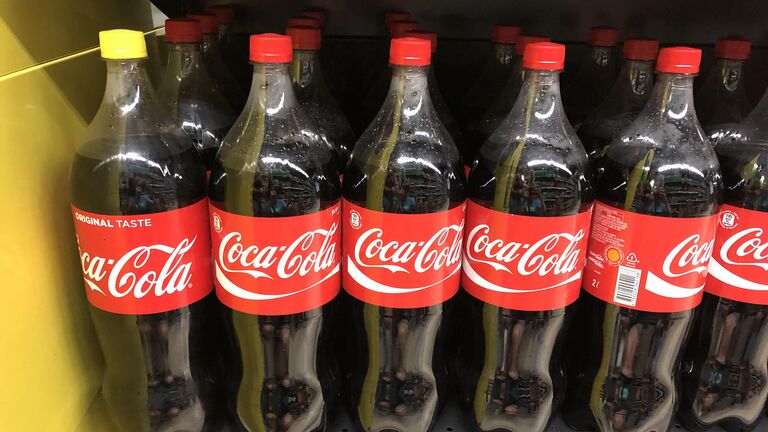
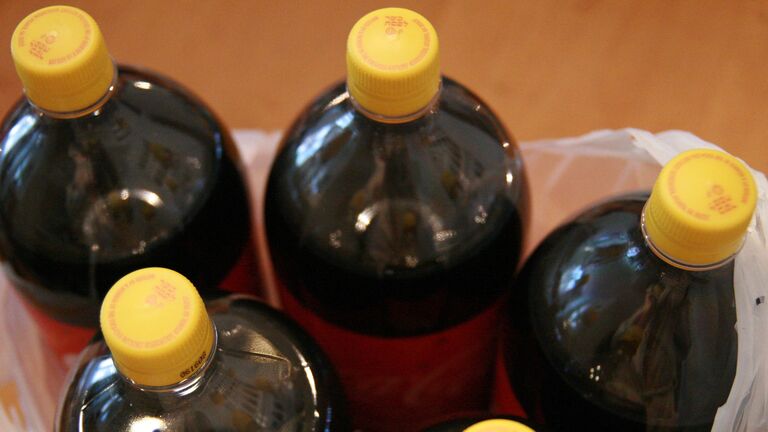
Practically everyone can recognize Coca-Cola anywhere, with its iconic color scheme of red and white. You know that whichever continent you are on, the red and white will get you the same thing—a carbonated soft drink. However, when you’re back home, you might find some Coke bottles at your local store that looks a bit different. We’re talking about those yellow caps. You’re right. They weren’t there before. However, they’re definitely not some kind of error, and you will see that they make perfect sense once you know what they are for. Read on to know more about Coke’s yellow caps.
Yellow-Capped Coca-Cola Bottle: It’s Not Just A Color
Other Colored Caps
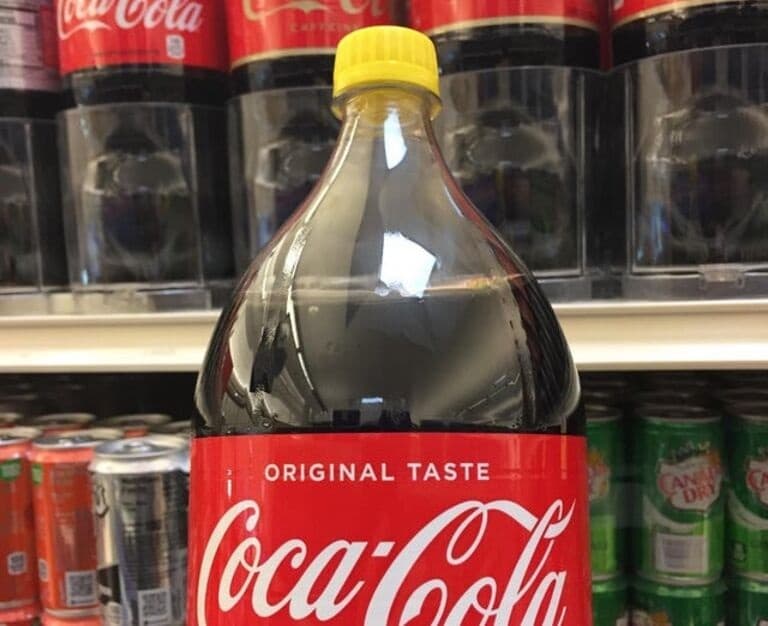
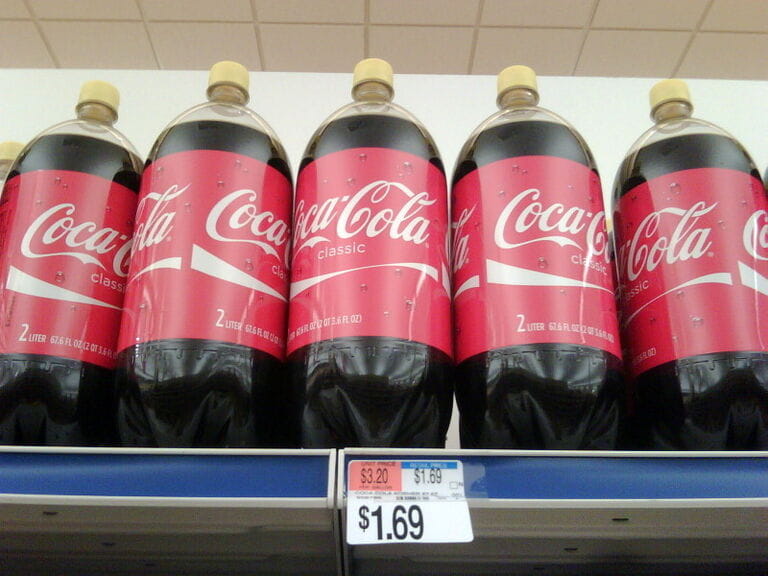
Now, you’re probably thinking that Coke bottles already have different colored caps on them. Perhaps you’re wondering what makes the yellow ones unique. Well, the caps usually tell you the flavor of the drink. For example, a beige cap on a Coke bottle means that the drink inside is vanilla-flavored. However, that isn’t true for the bright yellow caps. The color has nothing to do with the flavor of the soft drink.
Other Colored Caps
Not Available Year-Round
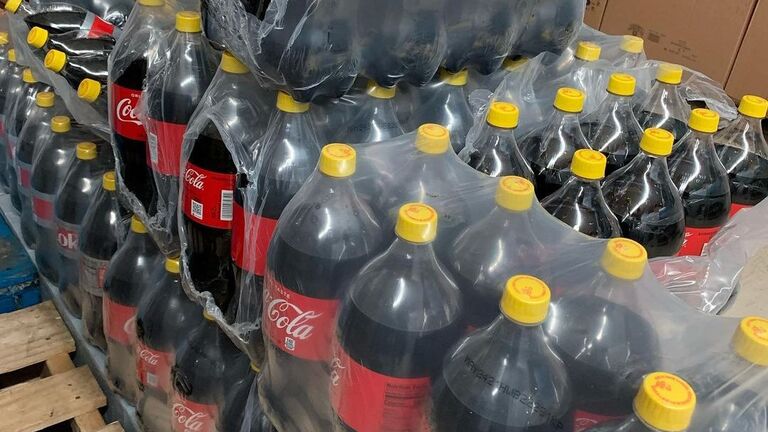
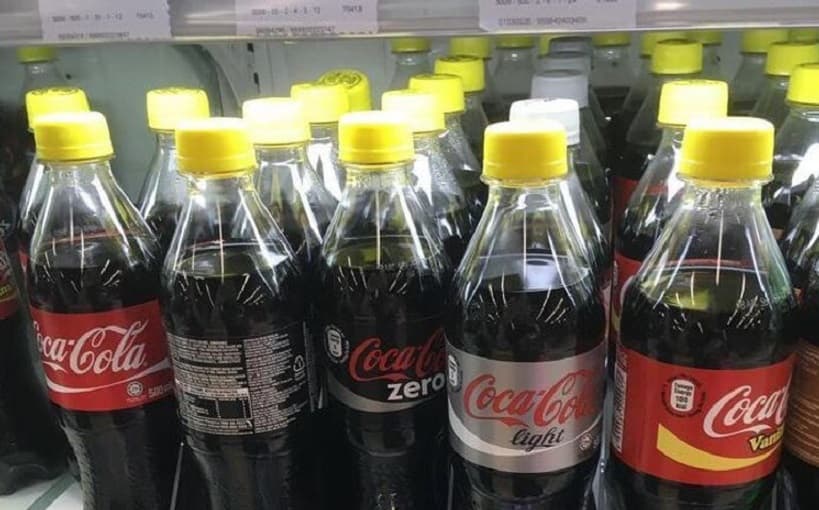
Aside from that, you can’t really see these particular bottles the entire year. They are only around within a particular time frame. The yellow caps begin to appear at supermarkets during spring. Since they are only available for a time, they are kind of special if you think about it. So, keep your eyes peeled. Perhaps you will spot them in real life! We bet you’re thinking, “If the yellow caps don’t indicate flavor, then what are they for?”
Not Available Year-Round
Everything Else Is The Same
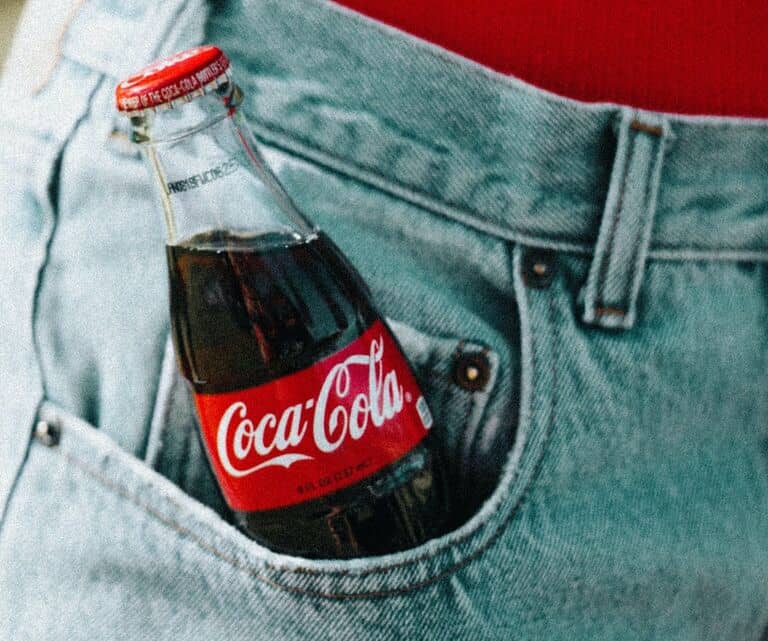
If you’re wondering whether there are other differences to watch out for, we’re actually only talking about the cap. Everything else looks the same, from the red and white on the label to the famous logo. Basically, it is just a regular bottle of Coke, except for the yellow cap. Now that that is clear, perhaps the next question should be what made Coke decide to use the yellow caps.
Everything Else Is The Same
The Iconic Look
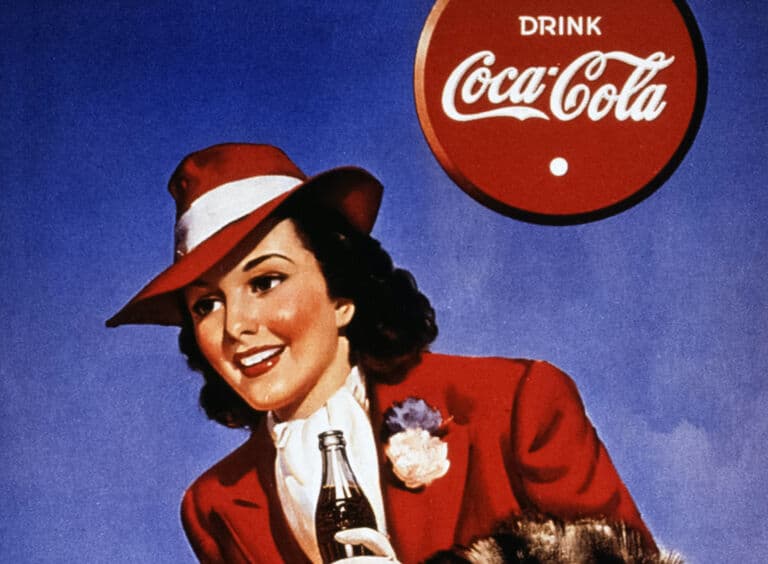
That got us thinking. How did the iconic look of Coca-Cola first come about? To answer that question, let us go back a century, to the year 1886, when John S. Pemberton mixed the ingredients for Coke for the first time. Today, the drink is known and loved by millions all over the world, but in 1886, it was just a new drink that Pemberton made. It had no name yet.
The Iconic Look
“Coca-Cola”
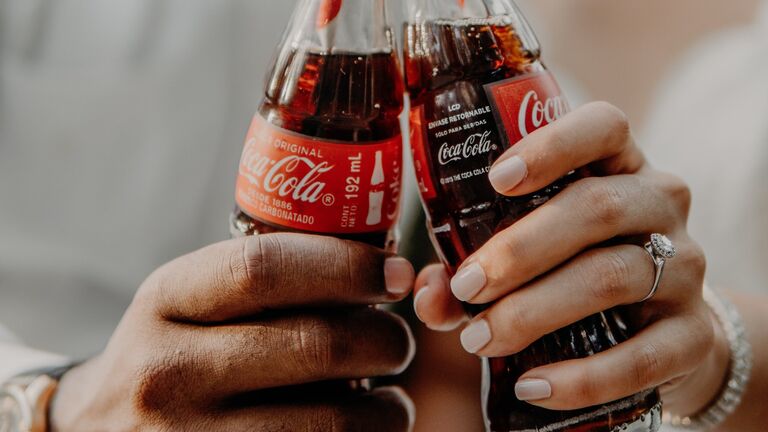
At that stage, it was just a fizzy, sweet concoction without a name. However, this soon changed when the financial advisor of Pemberton handed out pearls of wisdom. Frank M. Robinson went down in history as the guy who came up with “Coca-Cola.” Now, that is striking gold! But how did he come up with the name? What was the inspiration behind it? It probably never crossed his mind that it was going to become a recognizable name across the globe.
“Coca-Cola”
The Beloved Logo
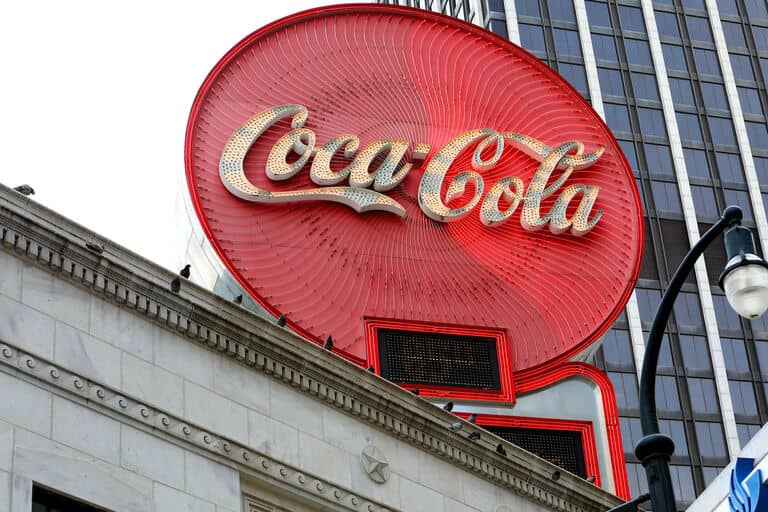
According to Coke’s website, Robinson explained, “The two Cs would look well in advertising.” Well, he wasn’t wrong. After giving the drink its name, he also drew the beloved logo of Coca-Cola, which became a trademark in 1893. The design may have undergone a couple of minor tweaks throughout the decades, but it has mostly remained the same since the day Robinson had put pen to paper. That is more than a hundred years of history!
The Beloved Logo
Still Around Over A Century Later
We wonder how Pemberton or Robinson would have reacted if they had been told that what they created would still be around over 100 years later. If it were us, we would be pretty shocked, incredulous even. Very few people can achieve something like that. But how about the famous red and white color scheme? When did Coca-Cola use it? Well, it happened at a time when the company was still in its infancy stage.
Still Around Over A Century Later
Wall Painting Ads
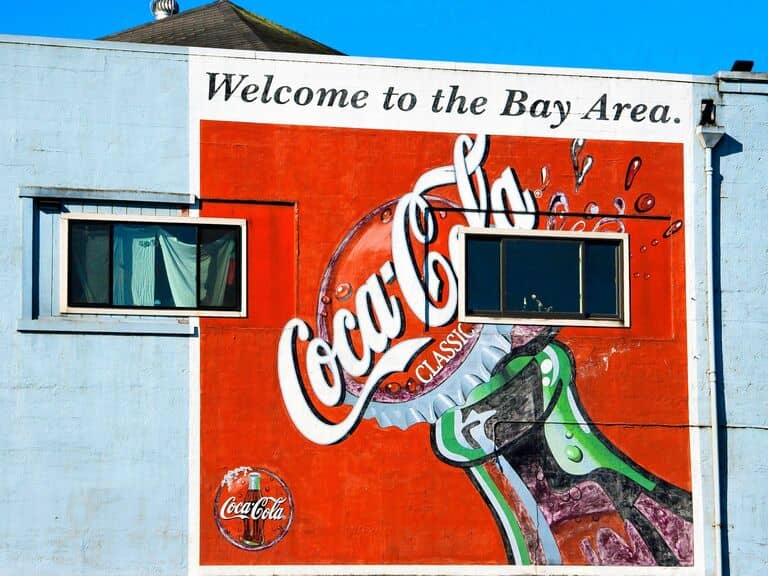
Coca-Cola made use of wall paintings to advertise the drink back in the 1890s. Even back then, it seems the young company already knew its branding really well. The murals had a red backdrop and white writing. Sound familiar? You may think that this was the turning point, but it actually wasn’t. And you would probably be surprised to find out how red and white came to be Coca-Cola’s colors.
Wall Painting Ads
For Taxes
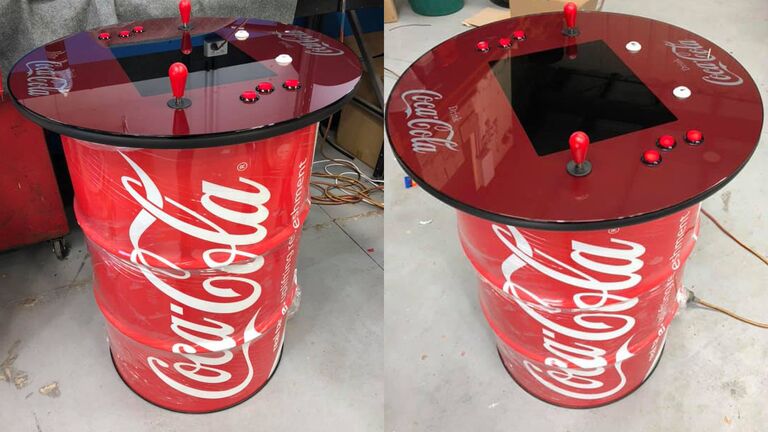
In a 2018 interview with Business Insider, a company spokesperson said, “From the mid-1890s, we began painting our barrels red so that tax agents could distinguish them from alcohol during transport.” The colors have stuck since then. If you think about it, Coca-Cola doesn’t really have a special reason for using the color red. Everything is just sort of accidental. So, what particular kind of red is used by the drinks giant?
For Taxes
Not One Shade Of Red
In truth, the red that we see on Coca-Cola products is from a trio of shades blended together. The final result has not been recorded in design guides officially. This means you will have to improvise if your goal is to paint your room “Coke red.” But maybe this is the reason why the color is not in design guides—so that no one can replicate it and use it to paint their room.
Not One Shade Of Red
A Color That Pops
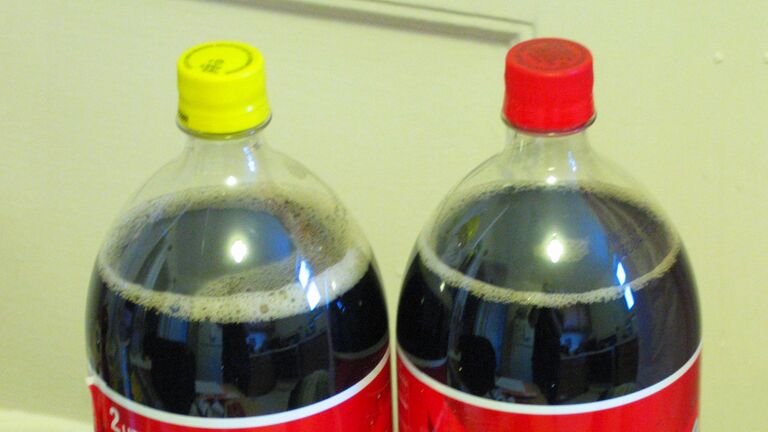
It’s easy to see why the yellow caps stick out as they do. They go against a color combo which the public has been familiar with for more than a century. With the scarlet label, the sunny shade definitely pops. However, the caps are likely not that prominent in the South Pacific region. This is especially true in 2014, when Coca-Cola seems to have thought they needed to change things up.
A Color That Pops
Different Colored Cans
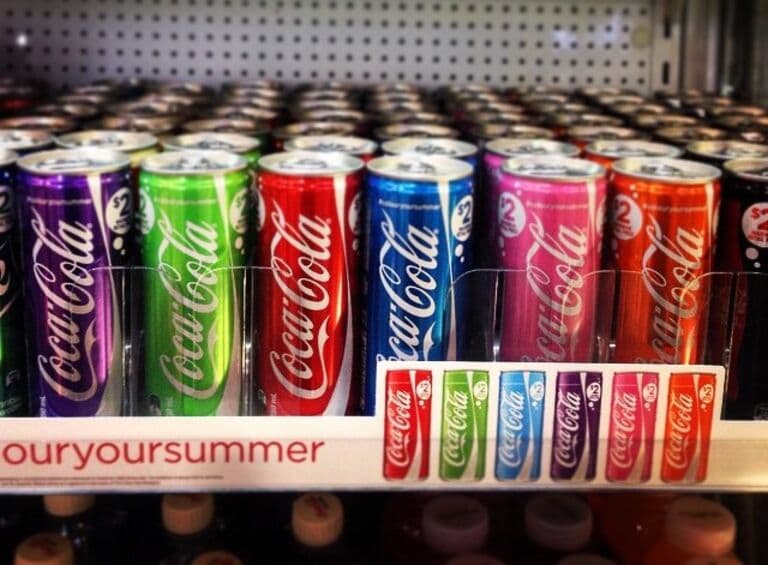
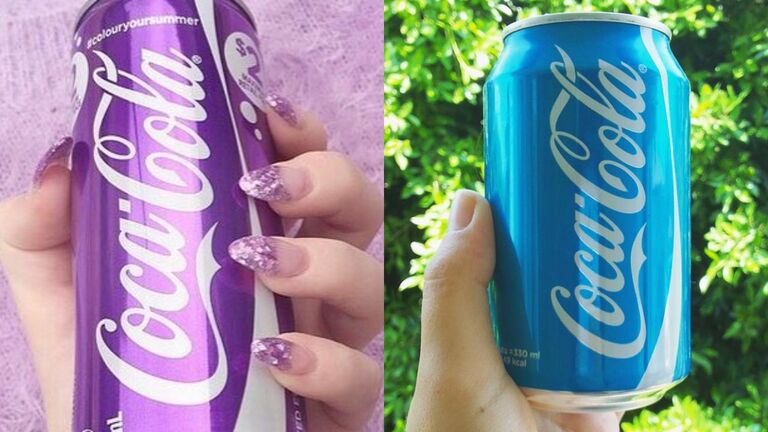
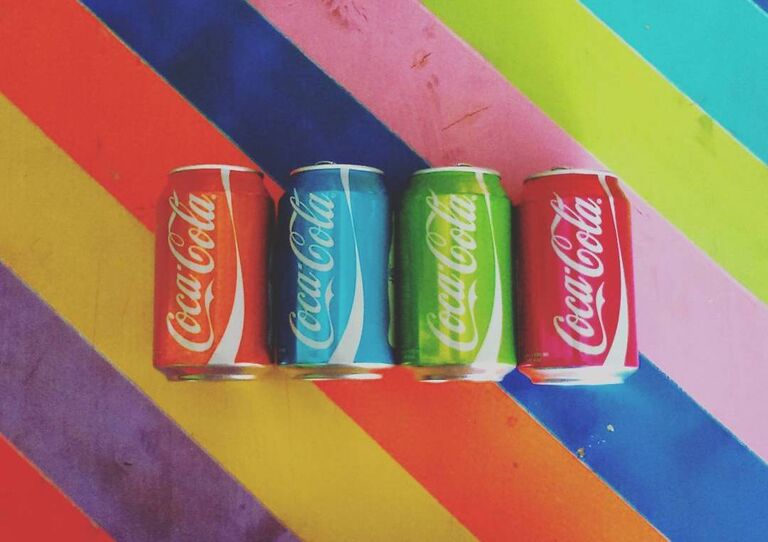
At the very least, the bright yellow would not clash with the cans which were released by Coca-Cola’s South Pacific branch back in 2014. For a short period, on the other side of the world, there were Coke cans emblazoned in five colors: green, blue, purple, orange and pink. So you see, the yellow is not so out there next to these five colors. But this begs the question, why the said colors?
Different Colored Cans
Vibrancy
Brand manager Angeline Lee said this about the campaign: “From a design perspective, we were really careful about retaining that vibrancy of Coke.” She added, “[The cans] really need to jump out on the shelf, so the boldness of the color was really important for us.” Apparently, the drinks giant wanted to catch the attention of people in the South Pacific. We think Coca-Cola succeeded in doing this. The five colors are different from their usual red and white.
Vibrancy
Intriguing Colors
The cans definitely “jumped out.” Coca-Cola in red was still available, and you could opt to get it. However, don’t you think that the other available colors are intriguing? Wouldn’t you consider reaching for one of those cans if you were at a store and you see them? You know, just to try it out. Anyway, you probably have no idea about this, but the staff who oversaw the almost sacrilegious process of switching up Coke’s packaging came across a huge roadblock.
Intriguing Colors
Logistical Nightmare
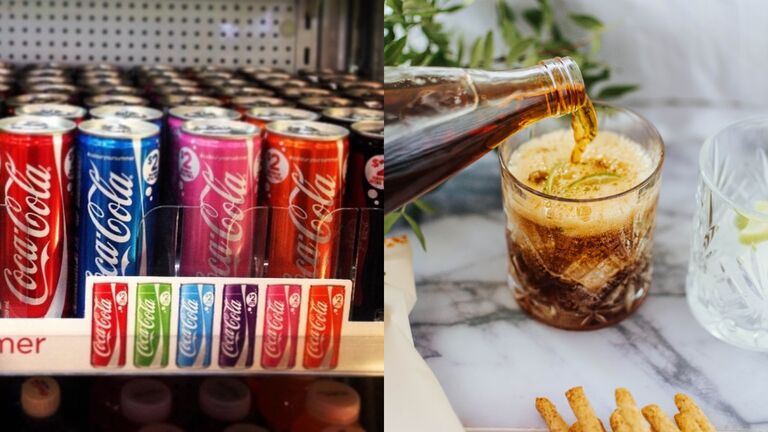
Head of the packaging graphics department Gary Burke explained the particular logistical nightmare that they had. “The biggest challenge was to get the variation in the market, so one shop didn’t get all green cans and another shop got all orange cans. We wanted to try and mix them up,” he said. While it is true that it is better if one store got all five colors, we think that just the fact that Coke isn’t in a can with its usual color can already make us curious about the drink and buy it. But that’s just us.
Logistical Nightmare
Easier Said Than Done
On paper, the idea was great. However, making sure that shops get different colored cans of Coca-Cola was hard to do in real life. The workers had to roll their sleeves up and get some sweat on. The whole thing couldn’t be done by machines alone. It happens. Sometimes you have this awesome idea, which you think is not that complicated, but when you actually do it, you realize that it is not that simple after all.

Easier Said Than Done
Labor-Intensive Process
Manager Jacqui Rooney said, “We decided to manually re-stack a pallet [containing the cans].” She added, “We had three different pallets each with two different colors. We’d take one layer off each pallet and manually rebuild it.” They likely saw cans in their dreams for many nights and long after they finished. That labor-intensive process is probably the reason the campaign wasn’t done in the U.S. Too bad because we’d like to try some Coke in a purple-colored can.

Labor-Intensive Process
A Different Situation
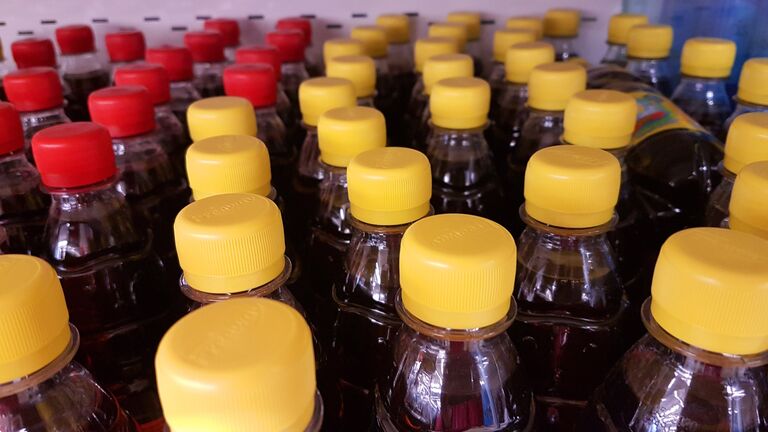
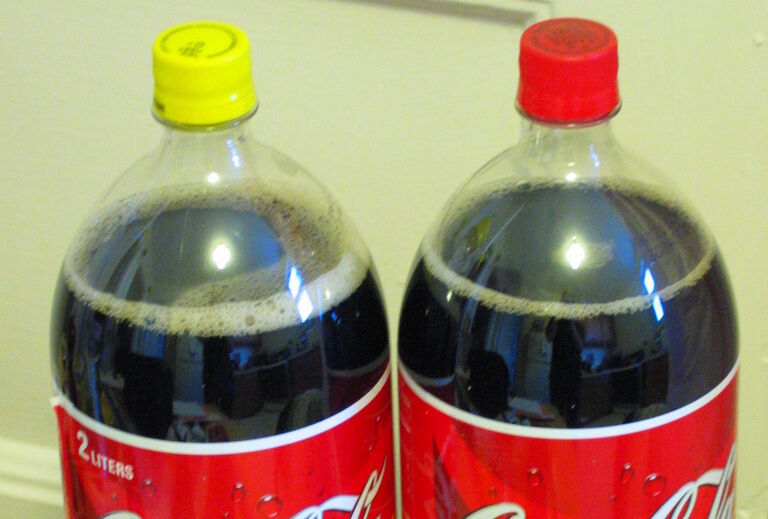
The yellow bottle cap situation is a bit different. They’re limited like the colored cans. However, compared to the formula used in regular Coca-Cola, there’s a slight variation in the ingredients of the drink if it comes in a bottle with a yellow cap. The colored cap may not mean a particular flavor, but the formula of the drink is a bit different. The difference is probably not noticeable to many people, though.
A Different Situation
A Different Sweetener
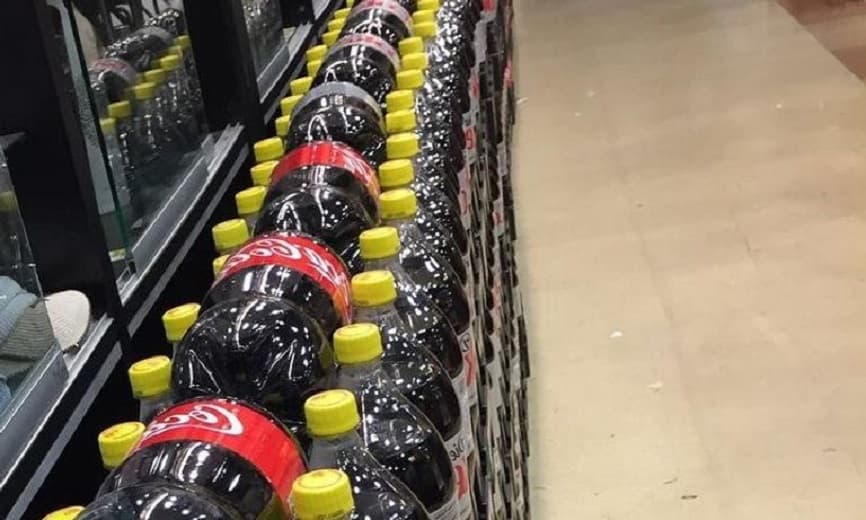
Regular Coca-Cola has high-fructose corn syrup, but the drink inside bottles with yellow caps do not. Instead, those drinks contain a different type of sweetener called sucrose – a substance derived from both cane sugar and beet sugar. On paper, that may appear fairly random, but there is a reason the drinks giant decided to swap out just a single component and keep everything else. And the move is for a specific group of people.

A Different Sweetener
A Jewish Holiday
The change was made for the people who celebrate Passover. During the yearly Jewish holiday, corn syrup, along with some other food items, is off the table. However, sucrose isn’t off-limits, which means it is still possible for folks who are observing Passover to enjoy a Coke—just the kind that comes from a yellow-capped bottle. It seems like the drinks giant really wants to make Coke a drink you can enjoy all year-round.
A Jewish Holiday
Kosher
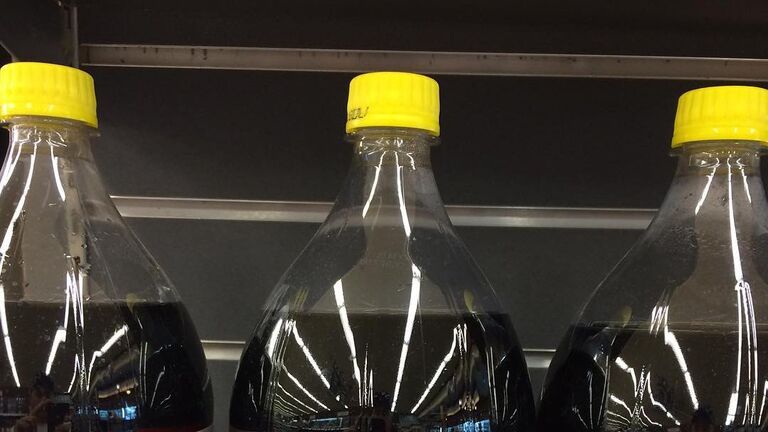
The special caps basically tell you that “this drink is kosher during Passover.” The Hebrew term Kosher means “fit, proper or correct” in terms of products which line up with the Jewish standards of food and beverages. Simply put, it is a seal of approval. If something is not kosher, it is not allowed during Passover. The holiday is celebrated usually in spring for around a week, and there are other customs that are observed.
Kosher
Confusing
Things can get a bit confusing, though. Food and drink which are otherwise considered kosher when it is not Passover may still be barred during the holiday. And regular Coke is in that specific category. The rules actually become more stringent during the annual holiday. Jews all over the world celebrate Passover, so you can expect to see kosher food and drinks in many parts of the globe during spring.

Confusing
No-no’s
So, what are no-no’s for Jewish people when it comes to food and drink during Passover? For starters, anything which is in the category of chametz. The Hebrew term means food items that have grain ingredients, so anything that contains oats, wheat, spelt, barley and rye. All food and drinks with these ingredients are prohibited. However, the list does not end here. There are more items that are not allowed during Passover.

No-no’s
No Chametz
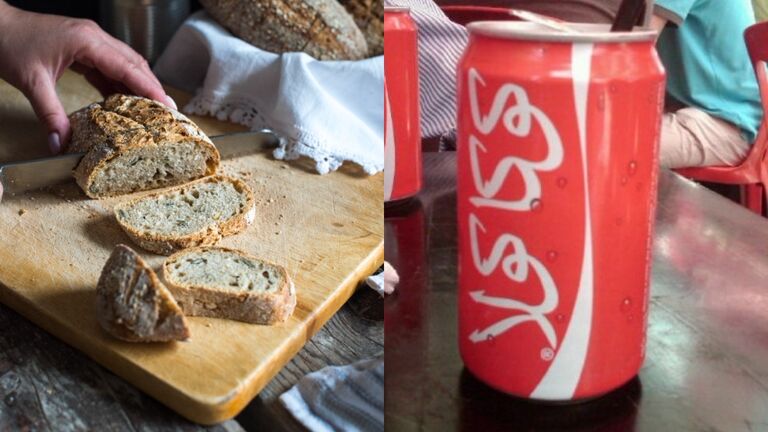
Any food which rises during cooking is prohibited as well. If, for example, there is a loaf of bread in the house, the occupants need to clear away the traces of it before Passover. And that means every last crumb. Folks who strictly observe the rules of Passover literally do not touch anything chametz during the holiday. Coca-Cola must have known about this, so they decided to make a kosher version of Coke.
No Chametz
Other Restrictions
Aside from chametz, kitniyot is also forbidden during Passover, though not all Jewish people have to observe kitniyot. If a person doesn’t have “Ashkenazi” (which means Eastern European) ties, then they are in the clear. However, that just covers around 25% of Jews in the world. That means there are still a lot of people who avoid kitniyot during Passover. But what exactly is kitniyot and does it mean anything for Coca-Cola?

Other Restrictions
No Legumes And Grains
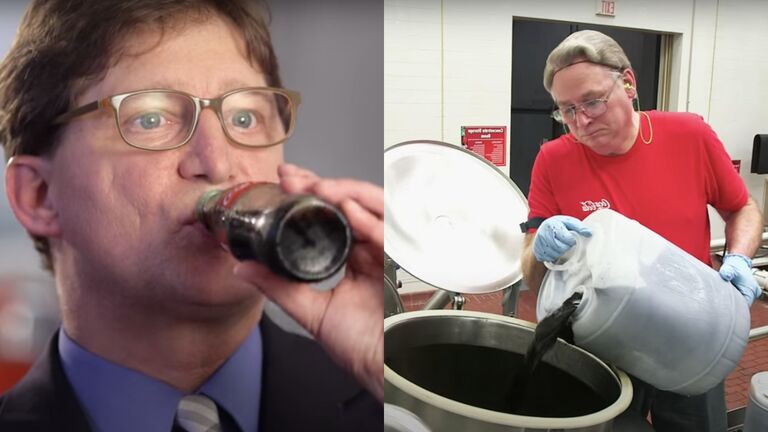
Kitniyot forbids Jewish people from touching legumes as well as more varieties of grain. Since corn is under that umbrella, it means Coca-Cola is not allowed during Passover, unless the high-fructose corn syrup in it is swapped with sucrose. As you can see, one small change can mean a big difference. With sucrose as its sweetener, the drink can be enjoyed by Jewish people even over Passover. But did you know that sucrose is not new to Coca-Cola?
No Legumes And Grains
Used To Be The Ingredient Of Choice
As mentioned, Coca-Cola has used sucrose before. It used to be the ingredient of choice of the company in the past. However, the sweetener was swapped out for the cheaper high-fructose corn syrup. You might think that that is a pretty obscure fact, but it might come in handy the next time you join trivia night… Anyway, back to Coca-Cola and the yellow caps. So, how did the drinks giant come up with the idea of using sucrose in Coke again?

Used To Be The Ingredient Of Choice
A Rabbi’s Idea
Coca-Cola decided to use sucrose for Passover because of a rabbi’s suggestion. A synagogue leader in Atlanta, Georgia, Tuvia Geffen came up with the idea back in the 1930s. This means that it has been decades since the concept for Passover-friendly Coke was first introduced. The question is what made the rabbi suggest this to the drinks company? We wonder if he believed that Coca-Cola would take up his suggestion.
A Rabbi’s Idea
Coca-Cola Gets Mentioned In Religious Edict
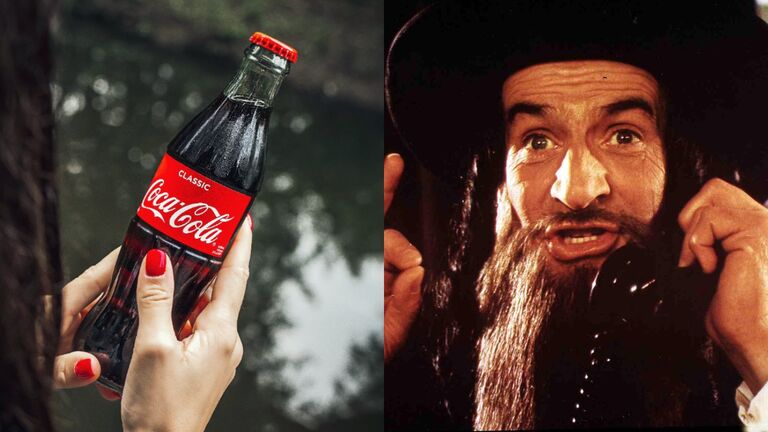
Coca-Cola was even mentioned by Rabbi Geffen when he wrote an official religious edict or a teshuva. “Because it has become an insurmountable problem to induce the great majority of Jews to refrain from partaking of this drink, I have tried earnestly to find a method of permitting its usage,” he noted. Basically, he wanted people to observe kitniyot. However, Coke was holding them back. The rabbi eventually found a way around this, though – after a bit of assistance.
Coca-Cola Gets Mentioned In Religious Edict
“A Pragmatic Solution”
Rabbi Geffen added, “With the help of God, I have been able to uncover a pragmatic solution.” Thanks to his solution, serving Coca-Cola over Passover is no longer an issue to Jewish families. So, has anyone raised a glass of Coke in his honor? He basically made it possible for Jewish people to still enjoy the fizzy drink even during the holiday. If not for him, Passover-friendly Coke would not be a thing.
“A Pragmatic Solution”
Passover-Friendly Coke
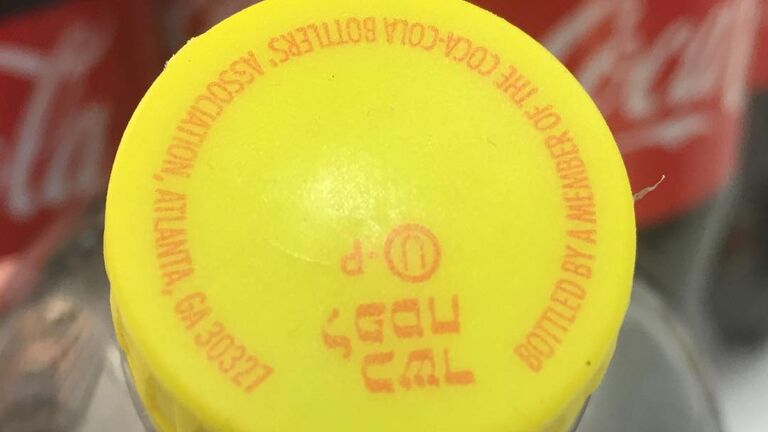
So, we know that a yellow cap means a Passover-friendly Coke, but did you know that there is another sign you can look out for? If you look closely at the plastic tops, you will see that they are printed with “O-U-P”, which means the product has been given a thumbs-up by the Orthodox Union. The drink is therefore confirmed kosher. That body is responsible for checking other food and drinks as well.
Passover-Friendly Coke
A Mystery
Isn’t it intriguing to read about? For those who aren’t Jewish, kosher standards are probably a mystery. We also do not really know the ins and outs of these standards, but at least we now know that we can still consume Coke over the holiday. If you are still unsure which kind of Coke is okay to drink during Passover, Coca-Cola can actually help you with that. A spokesperson of the company has addressed this.
A Mystery
Kosher Year-Round And For Passover
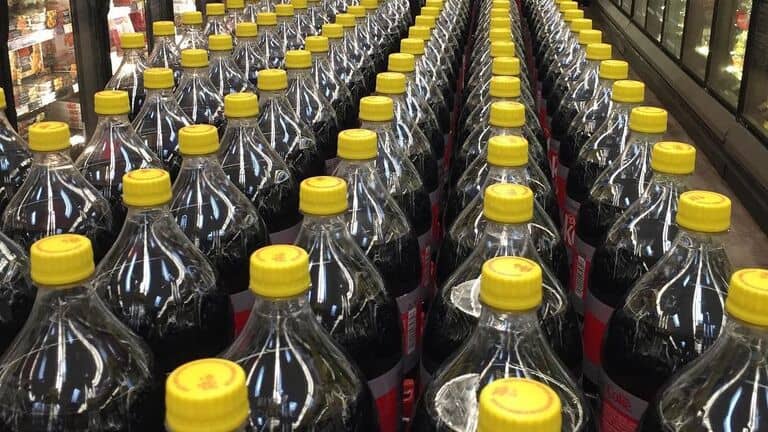
“The Coca-Cola Company offers products as kosher year-round (KYR) and kosher for Passover (KFP),” the spokesperson said. “In the United States, both Coca-Cola and Diet Coke are available as KYR and KFP in locations where the bottlers have decided to seek certification. Kosher for Passover products can be found in select markets during the Jewish holiday of Passover.” This means that if you are Jewish, you can enjoy a Coke at any time.
Kosher Year-Round And For Passover
The Real Deal
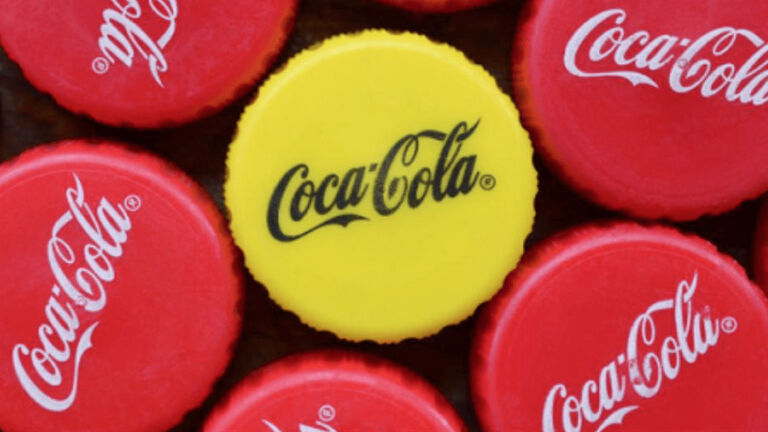
It’s actually easy to see if you’re consuming the real deal. Coca-Cola explained, “Only finished products bearing the logos of one of the designated Rabbinical organizations we work with can be guaranteed to be kosher.” They added, “The production is supervised by these organizations through the entire end-to-end production process.” However, Coke isn’t the only beverage that goes through strict measures for Passover. There are other food and drink items that undergo the same measures.
The Real Deal
The Orthodox Union
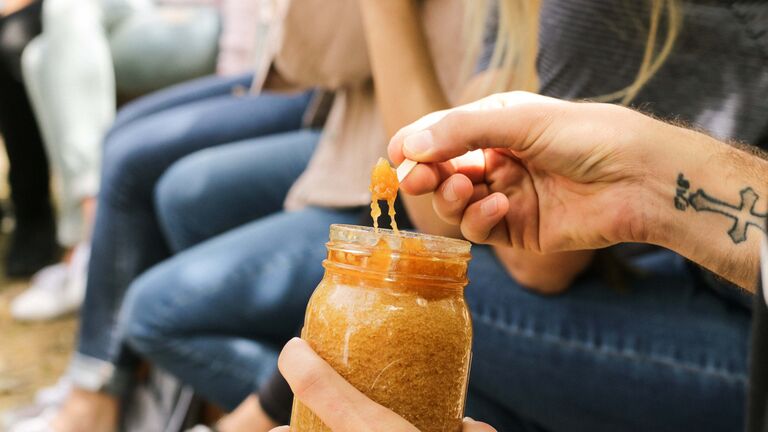
A lot of food and drink items have been reviewed by the Orthodox Union. They also check what has to be changed prior to the holiday. In 2021, certain honey products had to get “special Passover certification” because the organization spotted corn syrup in the products’ ingredients. You see, Coca-Cola is not the only one using corn syrup in their products. Many other companies use the sweetener as well since it is a cheaper option.
The Orthodox Union
Dairy Product
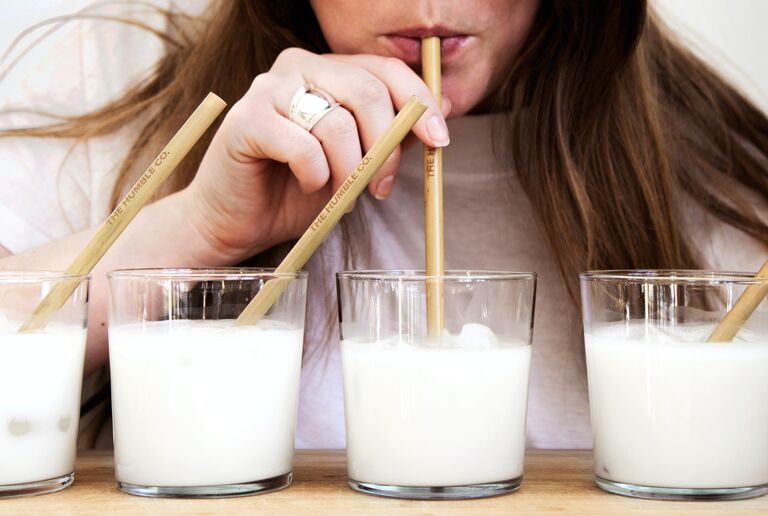
Another product that was scrutinized was milk. The Orthodox Union said that some brands of milk may have added vitamins which could be categorized as chametz. The union advised people to buy bottles which had “special Passover supervision.” As you can see, the group still checks out even the products that we usually consume every day. This is not the end of the list of items that they check, though.
Dairy Product
Frozen Fish
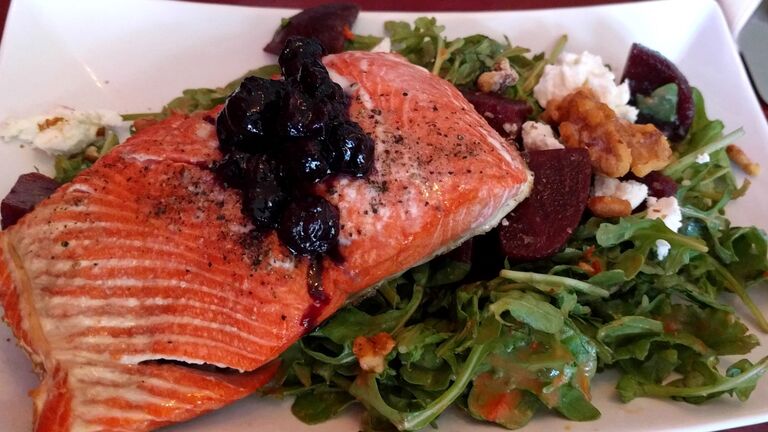
The website also listed all frozen fish as okay to consume over Passover, but the fish had to be raw inside the freezer. The list included delicacies like Costco’s Keta Salmon Fillets, Atlantic Salmon from 365 Everyday Value, Tilapia Loins from Kirkland Signature and Wellsley Farms’ Wild Sockeye Salmon. This is good news for Jewish folks who love eating fish. The range of food and drinks that the Orthodox Union checks out is truly impressive.
Frozen Fish
Extremely Thorough
The union is extremely thorough. Even saying that is an understatement! Here is something you should remember. A product may be deemed kosher for Passover, but that doesn’t mean you cannot get your hands on it if you are not Jewish. Anyone can buy those products, including the yellow-capped Coke. Perhaps you are wondering if there are actually non-Jewish people who choose this kind of Coca-Cola over the regular kind. As it turns out, there are folks like that.

Extremely Thorough
Old But Gold
As a matter of fact, some people pick up those bottles because they want to the brand’s old flavor. Apparently, there are people who think the yellow-cap Coke is so much better compared to the Coke that has high-fructose corn syrup. Are you curious now? Do you want to try it for yourself? Passover comes around again next year, on April 16, 2022. Make sure you mark the date down on your calendar!
Old But Gold